


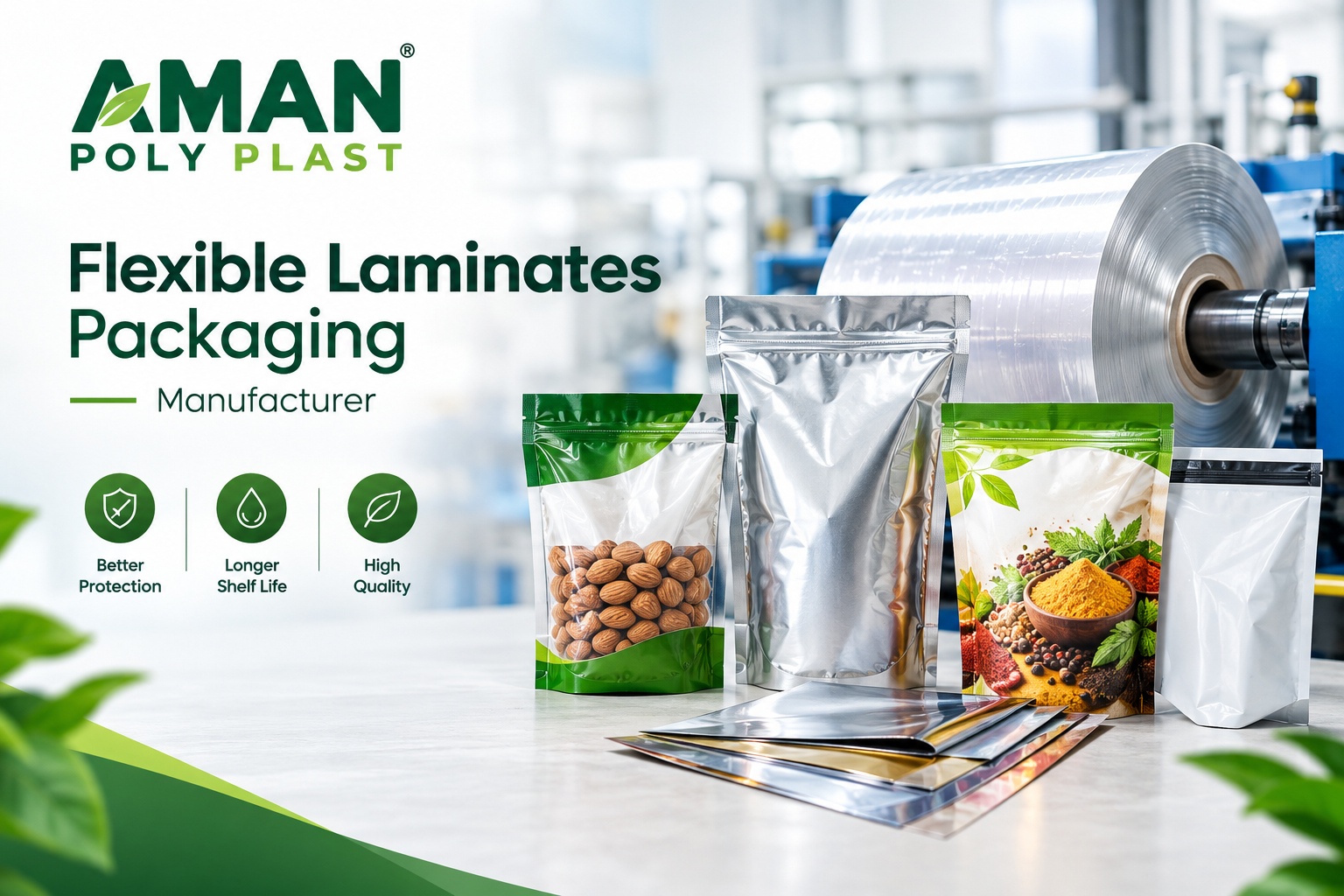
The requirements for the package will differ depending on the product itself. There may be a need for packaging resistant to moisture, or oxygen or even resistant to light. Some products require sturdy packaging because they will be involved in transportation and storage of the product. It is because of such varied requirements that flexible laminates are now becoming important packaging materials for various sectors.
When it comes to looking for Flexible Laminates Packaging Manufacturers, there are some aspects to consider. For instance, it is important to know about the material, manufacture and the packaging structure which you choose for your particular product. Aman Poly Plast manufactures flexible and laminated packages among others to serve different industries. The company is based in Faridabad, Haryana and its website says that it has been manufacturing packaging solutions since 2009. Aman Polyplast
Choosing your packaging material should not simply depend on the variety of products manufactured by the company.
What Is Flexible Laminate Packaging?
Flexible laminate packaging is made by combining two or more layers of packaging material to create a structure with properties suited to a particular application. In simple terms, instead of expecting one material to do everything, different layers can perform different jobs.
Basic materials used in flexible packaging structures can include plastic films, polypropylene films, polyethylene films, polyester films, and aluminium foil, depending on the product and the required performance.
The exact combination depends on factors such as:
- Type of product
- Moisture sensitivity
- Oxygen sensitivity
- Light protection
- Required strength
- Sealing requirements
- Printing requirements
- Storage and transportation conditions
ISO also recognizes the use of films such as biaxially oriented polypropylene (BOPP) in packaging, including their use in laminates with other films.
How Flexible Laminate Packaging Are Made?
Multiple suitable layers are combined to form one pack structure. The methods used can differ, depending on the materials and final product. In manufacturing of flexible packaging, there are solvent-based and solventless laminating techniques used. After lamination, material can pass various treatments such as slitting, printing, pouching, and many others, again depending on what packaging format is planned to be made.
What is important for the buyers is that each layer must function properly with other layers. Laminate can look good externally, but fail to perform, because the structure, bonding, sealing, and processing will be improper.
Common Materials Used in Flexible Laminates
There is no single laminate structure that is suitable for every product. The materials are selected according to the job the packaging needs to perform.
Some commonly used materials:
1. Polyester Films
Polyester films are often used when strength, dimensional stability, and a suitable printing surface are required.
2. Polypropylene Films
Polypropylene films, including BOPP, can offer clarity, stiffness, and useful printing characteristics. Their use in packaging films and laminates is also covered by ISO standards. ISO
3. Polyethylene Films
Polyethylene-based films can be used in packaging structures where flexibility and sealing properties are important.
4. Aluminium Foil
Aluminium foil can have laminated structure when the high protection is needed from light, moisture or grass. product based structure should be selected rather than thickness and highest barrier
Benefits of Flexible Laminate Packaging
The first advantage of the laminate is that different materials can be used in order to have a balance between properties.
In accordance with the structure, flexible laminate packaging can provide:
- Resistance to moisture
- Resistance to oxygen permeation
- Resistance to light
- Good mechanical strength
- Sealing properties
- Visibility of the product if needed
- High quality printing
- Flexible packaging form
- Different sizes and shapes
So for a product that is moisture sensitive, a laminate structure with proper moisture barrier properties must be used. If the product is sensitive to light, another structure will be needed.
Flexible laminate thus becomes quite useful for different products.
Industries That Use Flexible Laminated Packaging
Industries that uses the flexible laminated packaging:
1. Food and FMCG
Depending on the nature of food products, there could be the need for packaging that will offer protection against moisture, oxygen, light, contamination, or loss of smell.
These are some of the things that laminated pouches and films are developed for.
2. Pharmaceutical Packaging
Pharmaceutical and health care products could have very strict packaging considerations. Issues like material, barrier properties, sealing, and the necessary regulatory requirements must all be taken into account.
Packaging must be done according to the product and the needs of the market.
3. Personal Care
Some of the products here include powders, creams, sachets, and other personal care products. These could use laminated packages because of their flexibility regarding shape, size, and printing.
4. Industrial Products
There could be the need for industrial materials to be packaged in certain structures that give them protection and strength from moisture, dust, and other environmental factors. This again is dependent on what the material is and how it will be handled.
How to Choose the Right Laminate Structure
Choosing a laminate should start with the product.
Before speaking to Flexible Laminates Packaging Manufacturers, prepare basic information about what you are packaging and how the package will be used.
Consider these factors:
1. Product Type
Is the product a powder, liquid, solid, garment, food item, chemical product, or industrial material? Different products can require very different packaging structures.
2. Barrier Requirement
Ask what the product needs protection from.
This could include:
- Moisture
- Oxygen
- Light
- Odour transfer
- External contamination
Not every product requires the same level of barrier protection.
3. Package Size
The dimensions of the final pack should be decided based on the product quantity, filling process, storage, and transportation.
4. Sealing
A good seal is essential because the packaging structure must work properly with the selected sealing method.The manufacturer should understand whether the packaging will be heat sealed, machine packed, or converted into another format.
5. Printing
If the package needs branding, the printing process and artwork should be considered before finalizing the material structure.
6. Storage and Transportation
Think beyond the factory. A package may spend time in warehouses, trucks, distribution centers, retail stores, or courier networks. The expected handling conditions should be considered when choosing the material and structure.
Importance of Printing and Customization
Packaging is often the first physical interaction a customer has with a product.
Printed laminated packaging can help businesses display their brand name, logo, product information, instructions, and other important details.
Customization can include:
- Bag size
- Laminate structure
- Thickness
- Printing
- Finish
- Shape
- Closure
- Pouch style
For businesses selling consumer products, printing can also help create consistency across different product sizes and product lines.
However, attractive printing should not come at the expense of packaging performance. Both appearance and functionality should be considered together.
Quality Factors to Check Before Buying Laminated Packaging
Choosing laminated packaging manufacturers is an important purchasing decision, particularly when the packaging is being ordered in large quantities.
Before finalizing a supplier, ask about the following:
| Quality Factor | What to Check |
| Material | Is the material suitable for the product? |
| Lamination | Is the bonding consistent across the material? |
| Printing | Are colors, text and artwork consistent? |
| Sealing | Does the packaging provide a reliable seal? |
| Dimensions | Are size and specifications consistent? |
| Finish | Does the final surface meet the required appearance? |
| Quality Checks | Does the manufacturer have suitable inspection processes? |
| Samples | Can samples or trials be reviewed before bulk production? |
Consistency becomes especially important for businesses that purchase packaging regularly. Small variations in size, printing, sealing, or material can create problems during filling, packing, storage, or shipping.
How to Choose the Right Flexible Laminates Packaging Manufacturer
When comparing flexible packaging manufacturers, do not look at price alone.
A good supplier should be able to understand your product requirements and provide a packaging structure that fits the intended use.
Before placing a bulk order, discuss:
| Quality Factor | What to Check |
| Material | Is the material suitable for the product? |
| Lamination | Is the bonding consistent across the material? |
| Printing | Are colors, text and artwork consistent? |
| Sealing | Does the packaging provide a reliable seal? |
| Dimensions | Are size and specifications consistent? |
| Finish | Does the final surface meet the required appearance? |
| Quality Checks | Does the manufacturer have suitable inspection processes? |
| Samples | Can samples or trials be reviewed before bulk production? |
Conclusion
Flexible laminate packaging gives businesses a way to combine the useful properties of different packaging materials into one structure. Depending on the selected materials and construction, it can provide protection, strength, sealing performance, printability, and other properties required by different products.
Aman Poly Plast offers flexible packaging and laminated pouch solutions for different industries, with manufacturing capabilities that include lamination, printing, sl structure, it can provide useful protection, strength, sealing performance, printing quality, and resistance the manufacturer’s experience, production capabilities, quality processes, customization options, material knowledge, printing and on the manufacturer’s capabilities, laminated packaging can be customized in terms of size, material structure, thickness, printing, finish, shape, pouchitting, pouch making, and laminate inspection. Businesses can review its flexible laminates packaging manufacturing solutions when comparing packaging options and suppliers.
Frequently Asked Questions
1. What is flexible laminate packaging?
It is combining two or more layers of packaging material. Each layer can provide a different function, such as strength, sealing, printing, or protection from moisture, oxygen, or light.
2. What materials are used to make flexible laminates?
Yes it includes different plastic films, polypropylene films, polyethylene films, polyester films, and aluminium foil.
3. What are the benefits of laminated packaging?
Laminated packaging can combine the properties of different materials that can provide useful protection, strength, sealing performance, printing quality, and resistance to environmental factors.
4. How do I choose the right flexible laminates packaging manufacturer?
While choosing the right flexible laminates packaging manufacturers you should look for the manufacturer’s experience, production capabilities, quality processes, customization options, material knowledge, printing and lamination capabilities, and ability to maintain consistent specifications.
5. Can flexible laminate packaging be customized?
Yes. Depending on the manufacturer’s capabilities, laminated packaging can be customized in terms of size, material structure, thickness, printing, finish, shape, pouch style, and closure.