


Recently, the procurement head of a food company received a one-line email from their legal team: “Please confirm whether our pouches are EPR-compliant.” Having purchased laminated pouches for years, they had never encountered such a question before. Consequently, they were unsure what this meant in the context of their packaging procurement.
If you find yourself in a similar situation, this blog is for you. It explains what ‘Extended Producer Responsibility’ (EPR) entails for businesses that purchase flexible packaging, how packaging materials and their composition can influence classification, and what the responsibilities of various stakeholders might be. It also covers key questions you should ask flexible packaging manufacturers in India before placing your next order.
For businesses that procure laminated pouches, printed rolls, or flexible packaging films**Understanding EPR requirements has become a crucial aspect of packaging procurement. By gaining clarity on who is responsible for compliance, what documentation is required, and how the choice of packaging impacts EPR obligations, businesses can make more informed purchasing decisions.
What Is EPR and Why Does It Matter for Pouch Buyers?
EPR stands for Extended Producer Responsibility which is an Indian statutory provision according to the Plastic Waste Management Rules, 2016 (as amended). EPR implies that some companies are responsible for the management of plastic waste of packaging used for their products.
More specifically, companies obliged to implement EPR have to meet the obligations on packaging waste related to recycling, reuse, recycled plastic content and disposal of the packaging after usage.
For the case of a food company buying printed laminated pouches, this implies that the decision-making process concerning packaging should involve more aspects than costs, looks and durability.
You also need to understand:
- Which EPR category does your pouch fall under?
- Which business will be responsible for fulfilling the EPR obligations?.
- Is the packaging design suitable for recycling?
- What information can your supplier provide regarding the packaging material and its weight?
- Do you have the necessary registrations and documentation in place?
Which EPR Category Does Your Flexible Packaging Pouch Fall Under?
Not all plastic bags are classified in the same way. The packaging material determines which category it falls into under the EPR (Extended Producer Responsibility) framework. For those purchasing flexible packaging, the key distinction lies between Category 2 and Category 3.
| EPR | Packaging Structure | Common Examples |
| Category 1 | Single-layer or multilayer flexible plastic packaging made from different types of plastic | PE bags, PP-based flexible packaging and plastic-layer laminates |
| Category 2 | Multilayered packaging containing at least one plastic layer and at least one non-plastic layer | PET/Aluminium Foil/PE laminated pouches |
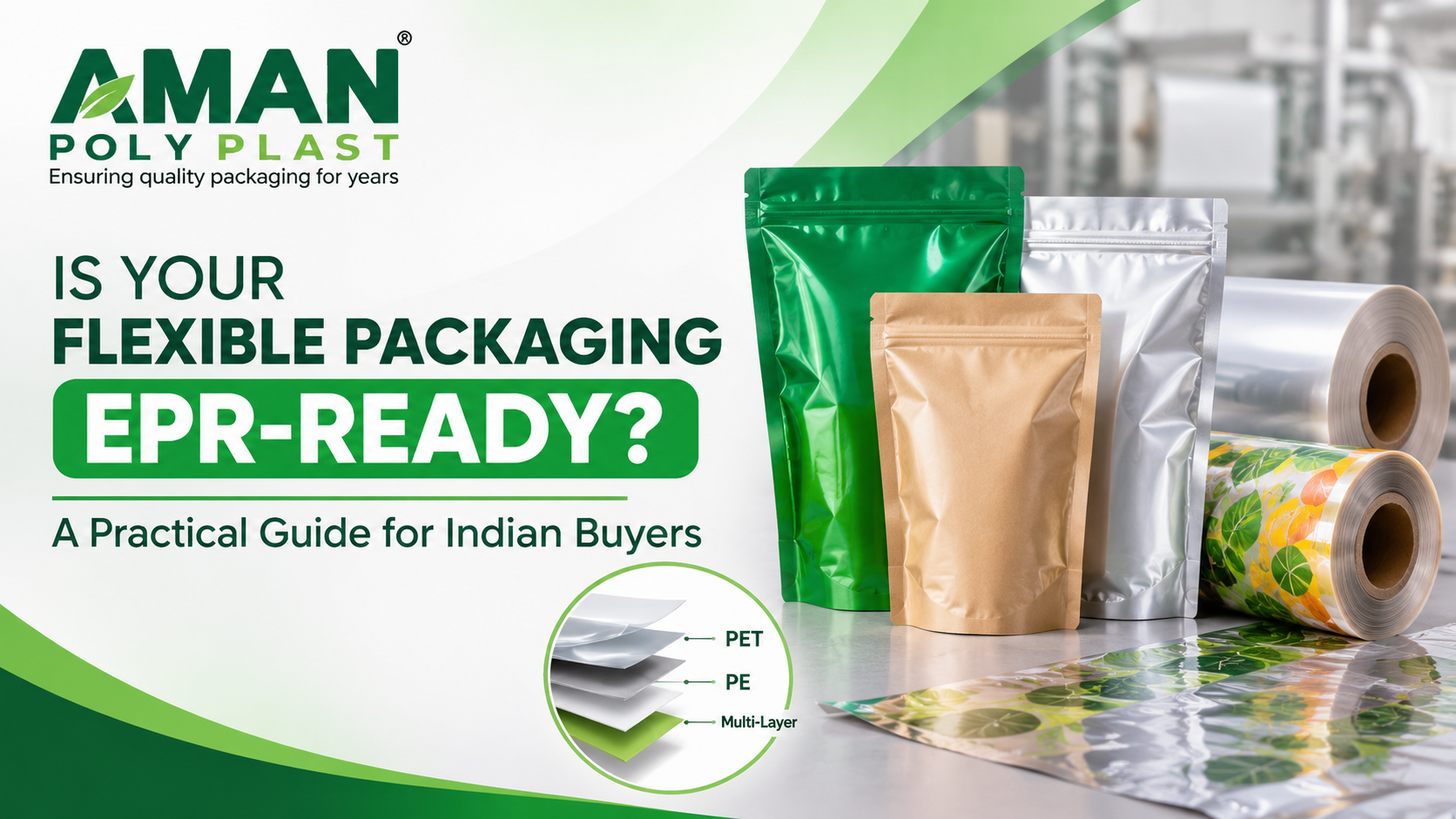
As an example, a PET/PE pouch has different plastic layers and usually falls into Category II. A PET/aluminum foil/PE pouch has an aluminum layer in addition to the plastic, and falls into Category III.
This difference matters because EPR obligations and applicable targets may differ depending on the category. Before you order, check the exact material composition with your packaging supplier rather than just relying on generic product names like ‘laminated pouch’, ‘stand-up pouch’, or ‘printed pouch’.
How does the design of a pouch affect EPR requirements?
The design of a flexible packaging pouch plays an important role in determining its EPR classification and applicable compliance requirements. Factors such as the type of plastic used, the number of material layers, their recyclability, and the overall packaging structure can influence how a pouch is categorised under India’s Plastic Waste Management Rules.
For example, a single-layer plastic pouch may have different recycling characteristics from a multilayer laminated pouch made using materials such as PET, polyethylene (PE), or aluminium foil. While these combinations can provide better barrier protection, product freshness and shelf life, they can also make material separation and recycling more challenging.
Before finalising a packaging design, businesses should consider the following factors:
- Material Composition: Identify the materials used in each layer, including PET, BOPP, PE and aluminium foil.
- Number of Layers: Multilayer structures may have different recyclability characteristics compared with single-material packaging.
- Recyclability: Assess whether the packaging structure is recyclable through available processes and applicable guidelines.
- Packaging Category: Determine the applicable EPR classification based on the packaging material and structure under current regulations.
- Documentation: Obtain accurate material specifications and supporting documentation from your packaging supplier.
For businesses sourcing laminated pouches, printed rolls and flexible packaging films, discussing these factors with experienced flexible packaging manufacturers in India can help avoid compliance-related confusion and support better packaging decisions.
Which documents should you request from flexible packaging manufacturers?
Before finalizing a bulk order, request technical information that your compliance and procurement teams can use. Here’s a useful checklist:
- Full material structure
- Layer composition
- Packaging weight
- Film thickness and specifications
- Recycled material information, if any
- Product specifications
- Supplier registration information
What Are the EPR Responsibilities of Packaging Manufacturers and Brand Owners?
When purchasing flexible packaging, it is important to understand that EPR responsibilities are not necessarily the same for packaging manufacturers, brand owners and importers. Under India’s Plastic Waste Management Rules, the obligations depend on the role each business performs in the packaging supply chain.
Here is how their responsibilities generally differ:
1. Packaging Manufacturers
Businesses manufacturing plastic packaging materials may fall under the Producer category, depending on their activities and the applicable EPR provisions. Their responsibilities can include:
- Maintaining accurate records of plastic packaging manufactured.
- Obtaining applicable registrations under the EPR framework.
- Providing accurate packaging material specifications to buyers.
- Meeting relevant regulatory reporting and compliance requirements.
2. Brand Owners
Companies selling products under their own brand names using plastic packaging may fall under the Brand Owner category. Their responsibilities can include:
- Obtaining applicable CPCB or relevant State Pollution Control Board registration.
- Meeting applicable EPR targets for plastic packaging.
- Maintaining records of packaging placed in the Indian market.
- Ensuring required recycling, reuse and recycled-content obligations are fulfilled, where applicable.
- Filing prescribed returns and maintaining supporting documentation.
3. Importers
Businesses importing plastic packaging or products packaged in plastic may also have EPR responsibilities under the applicable regulations. These can include registration, reporting and fulfilling relevant EPR obligations.
What Should Buyers Check Before Placing an Order?
Before finalising a packaging supplier, procurement teams should clarify:
- Who is responsible for applicable EPR obligations?
- Is the supplier registered under the relevant category, where registration is required?
- Can the manufacturer provide complete material composition and packaging weight details?
- Are EPR responsibilities clearly defined in the purchase agreement?
- Is the required compliance documentation available?
An important point for buyers is that purchasing pouches from a third-party manufacturer does not automatically fulfil the brand owner’s EPR obligations. CPCB’s EPR FAQs clarify the treatment of third-party manufacturing arrangements, including cases where the manufacturer’s own brand name is not associated with the packaging.
Therefore, both parties should understand their respective regulatory roles before entering into a supply agreement.
How Aman Polyplast Supports Flexible Packaging Requirements
At Aman Poly Plast Pvt. Ltd., we understand that companies need packaging that meets their product standards, production demands, and quality expectations. Established in 2009, we are an ISO 9001:2015 certified packaging manufacturer based in Faridabad, Haryana, with over 15 years of experience in this field.
Our packaging capabilities include:
- Customized flexible packaging solutions.
- Multilayer laminated packaging.
- Printed flexible packaging films and rolls.
- Customized laminated bags and pouches.
- In-house printing facilities.
- Material and product quality checks.
We work with industries across the food, apparel, e-commerce, retail and industrial sectors to meet their diverse packaging needs.
For businesses evaluating flexible packaging manufacturers in India, we believe that material transparency, accurate specifications, and consistent quality are crucial components of a trustworthy business relationship.
We can discuss your packaging requirements, such as design, size, thickness, printing and application, to find the perfect solution for you.
Conclusion
EPR should not be considered a last-minute formality after purchasing thousands of laminated pouches. It’s best to consider packaging types, materials, and paperwork before finalizing your packaging supplier.
Whether you buy single-layer films, PET/PE laminates or aluminum foil pouches, understanding the composition of the material is an essential first step.
Choosing experienced flexible packaging manufacturers in India can help your business obtain the technical specifications and manufacturing know-how needed to make better packaging purchasing decisions. Are you looking for customized flexible packaging solutions? Contact Aman Polyplast to discuss your packaging needs.
Frequently Asked Questions
1. Are laminated pouches covered under EPR in India?
Yes. Laminated pouches made from plastic-only layers or combinations of plastic and non-plastic layers fall under the relevant flexible or multilayered plastic packaging categories, depending on their composition.
2. What is the difference between Category II and Category III packaging?
Category II covers flexible plastic packaging made from single or multiple plastic layers. Category III covers multilayered packaging containing at least one plastic layer and at least one non-plastic layer.
3. Does buying EPR-compliant packaging make a brand owner EPR compliant?
No. Buying packaging from a supplier does not automatically fulfil the brand owner’s EPR obligations. Applicable registration, reporting and waste-management responsibilities must be fulfilled separately.
4. What information should a pouch manufacturer provide to buyers?
Buyers should request material composition, layer specifications, packaging weight, thickness, technical specifications and relevant registration details, as applicable.
5. Can food packaging use recycled plastic under EPR requirements?
Recycled plastic use in food-contact packaging is subject to applicable FSSAI and other regulatory requirements. Where its use is prohibited by an applicable statutory requirement, the relevant EPR recycled-content exemption provisions may apply, subject to the required documentation.